A token, straight away
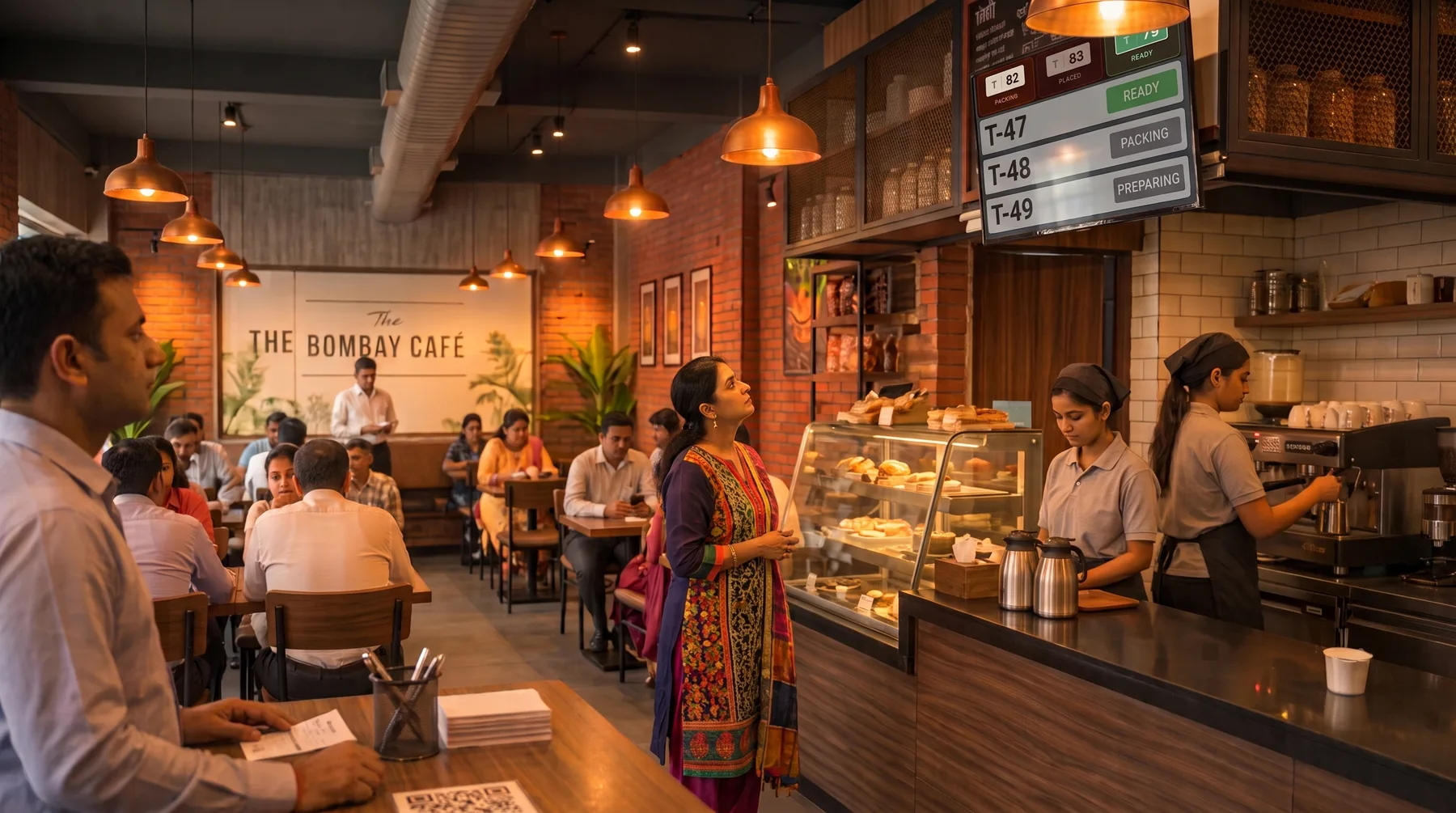
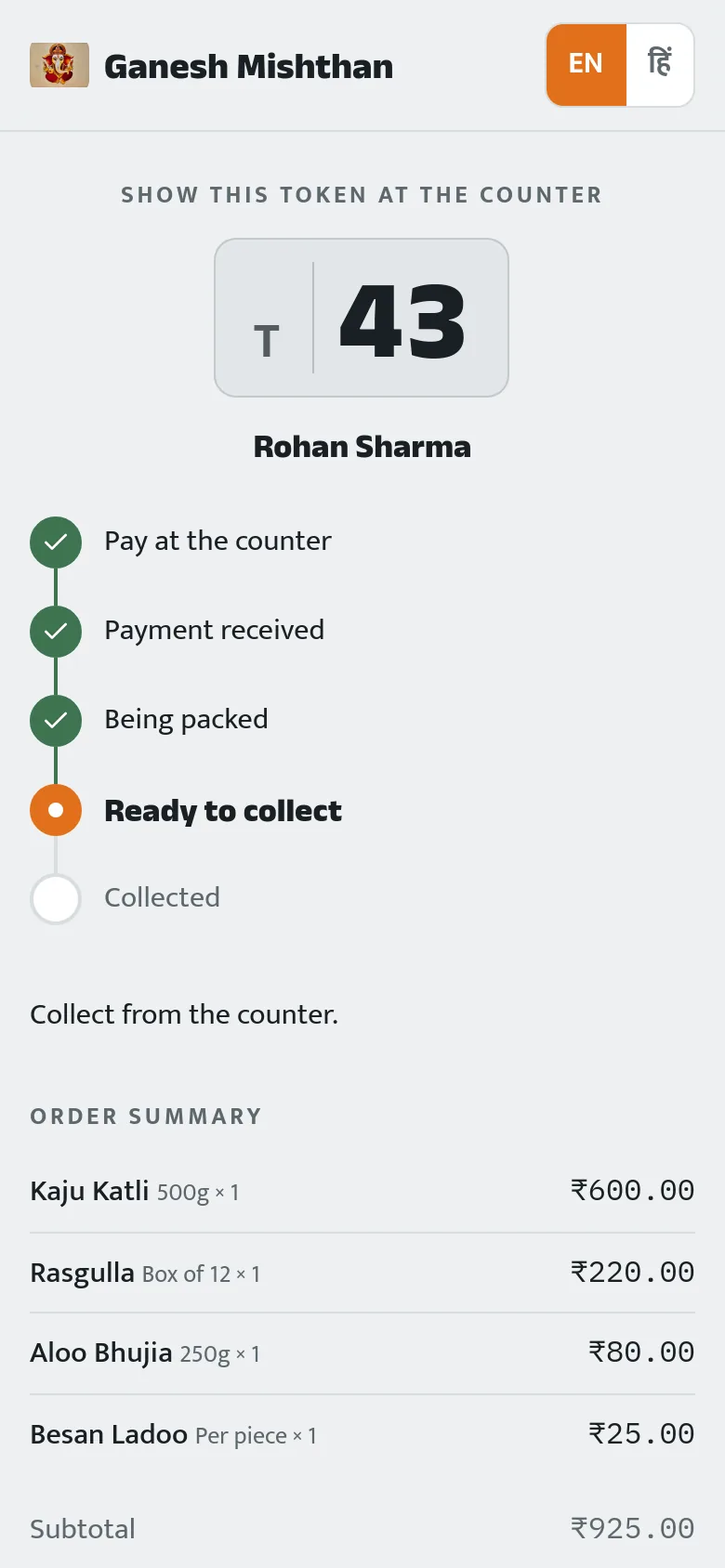
They scan, browse, submit. T47 is issued before any money moves — which is exactly what a cash customer needs to show your counter.
 TableTap.
Restaurants · Cafés · Sweet shops · Bakeries
Customers order from their own phone. It reaches your kitchen already correct, already priced, already paid — or flagged to settle at the counter.
10 days freeWe come to your shop and set the whole thing up — menu, QR codes, counter screen. Run real orders for ten days before you pay anything.
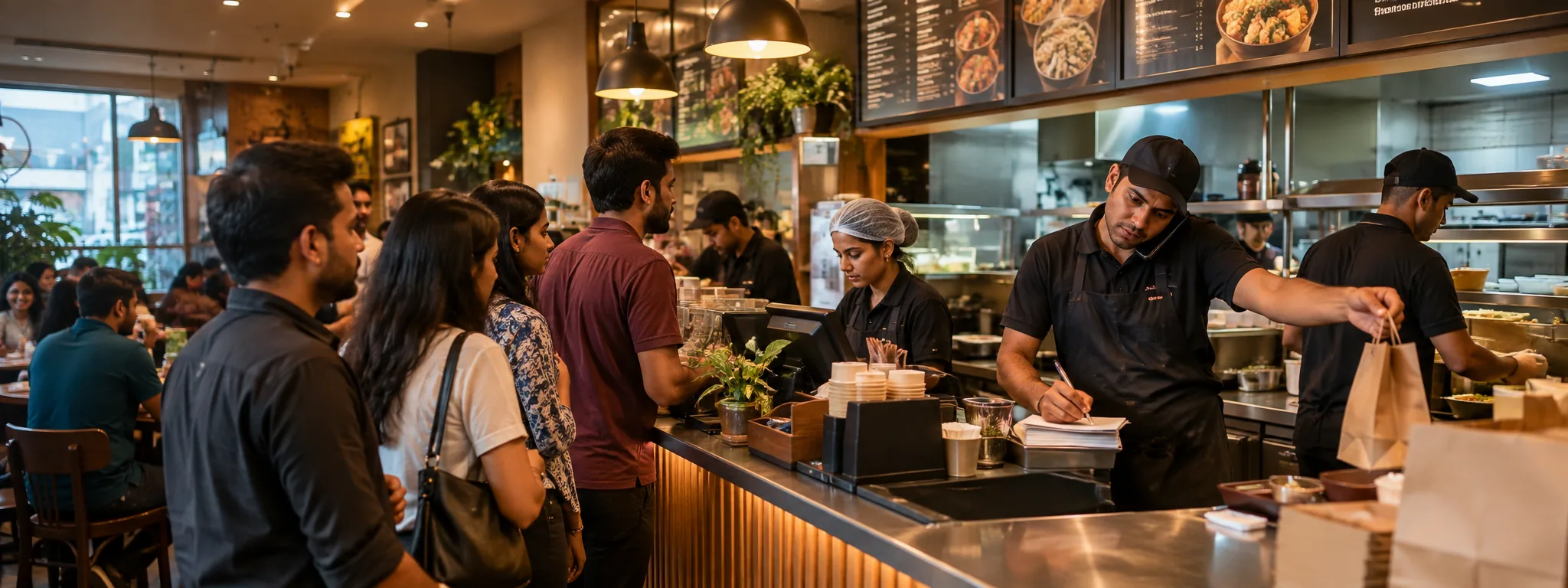
The actual bottleneck
No card machine has ever shortened that queue, because payment was never the slow part.
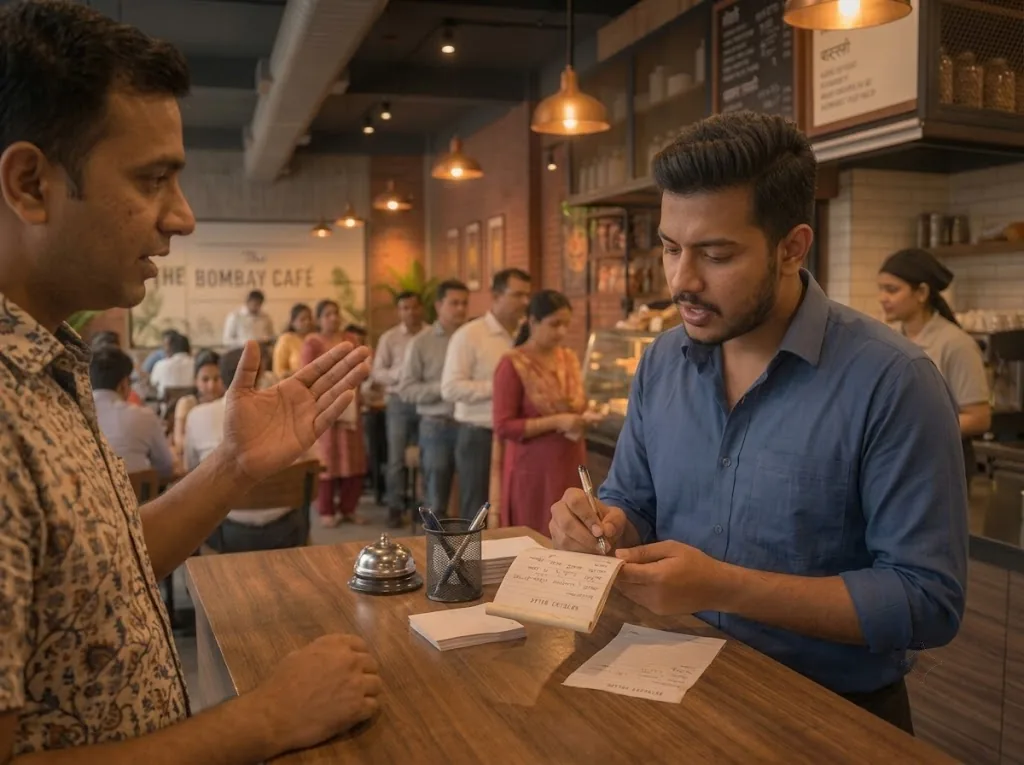
It’s waiting to order. At a rush, one person is trying to hear fourteen items over a crowd, write them down, price them and take money — all at once. Customers wait. Orders come out wrong. Staff are finished by eight.
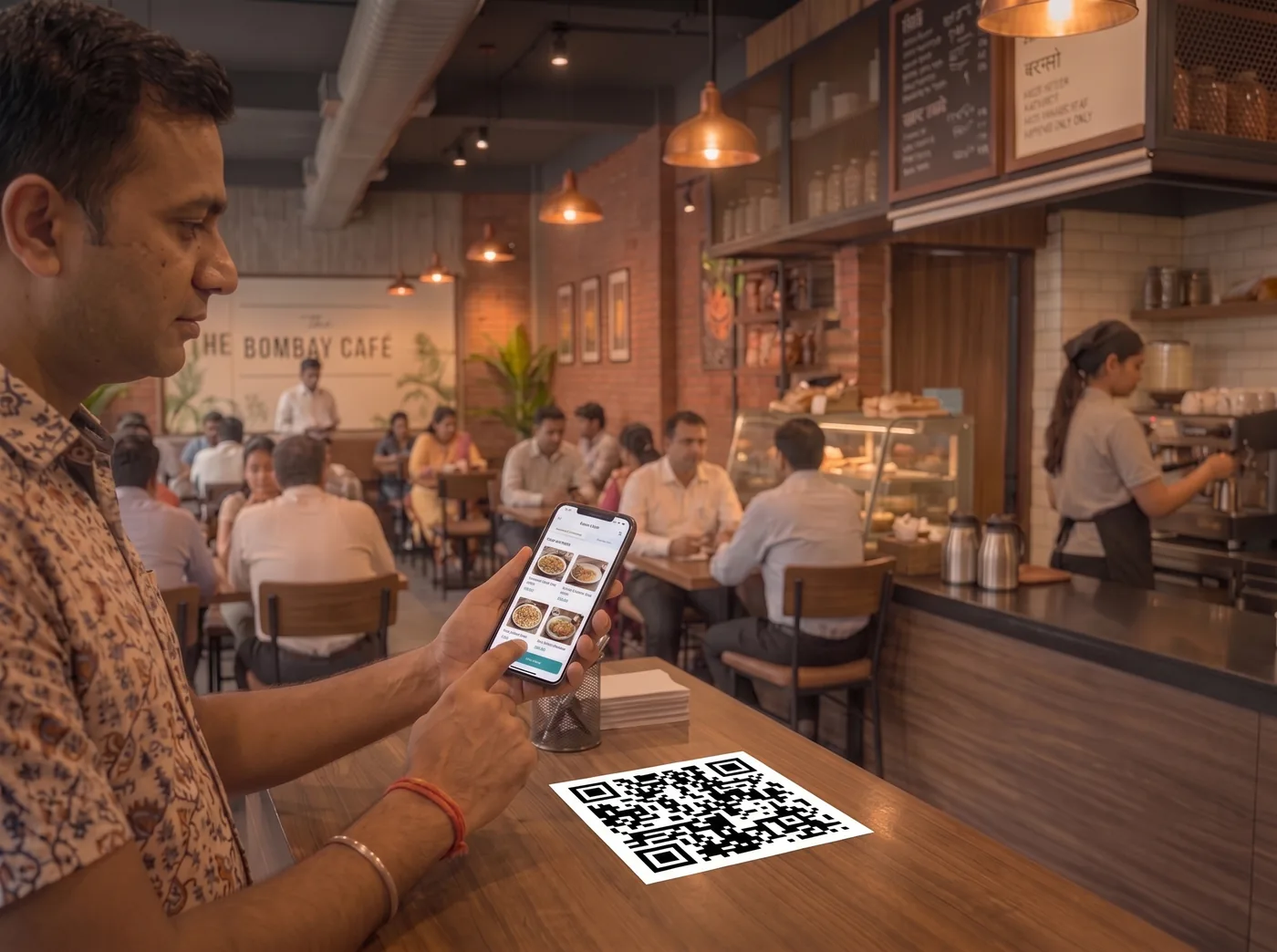
TableTap takes order-taking off your counter entirely. The customer does it themselves, correctly, at their own pace, while they’re standing in your shop or waiting for a friend.
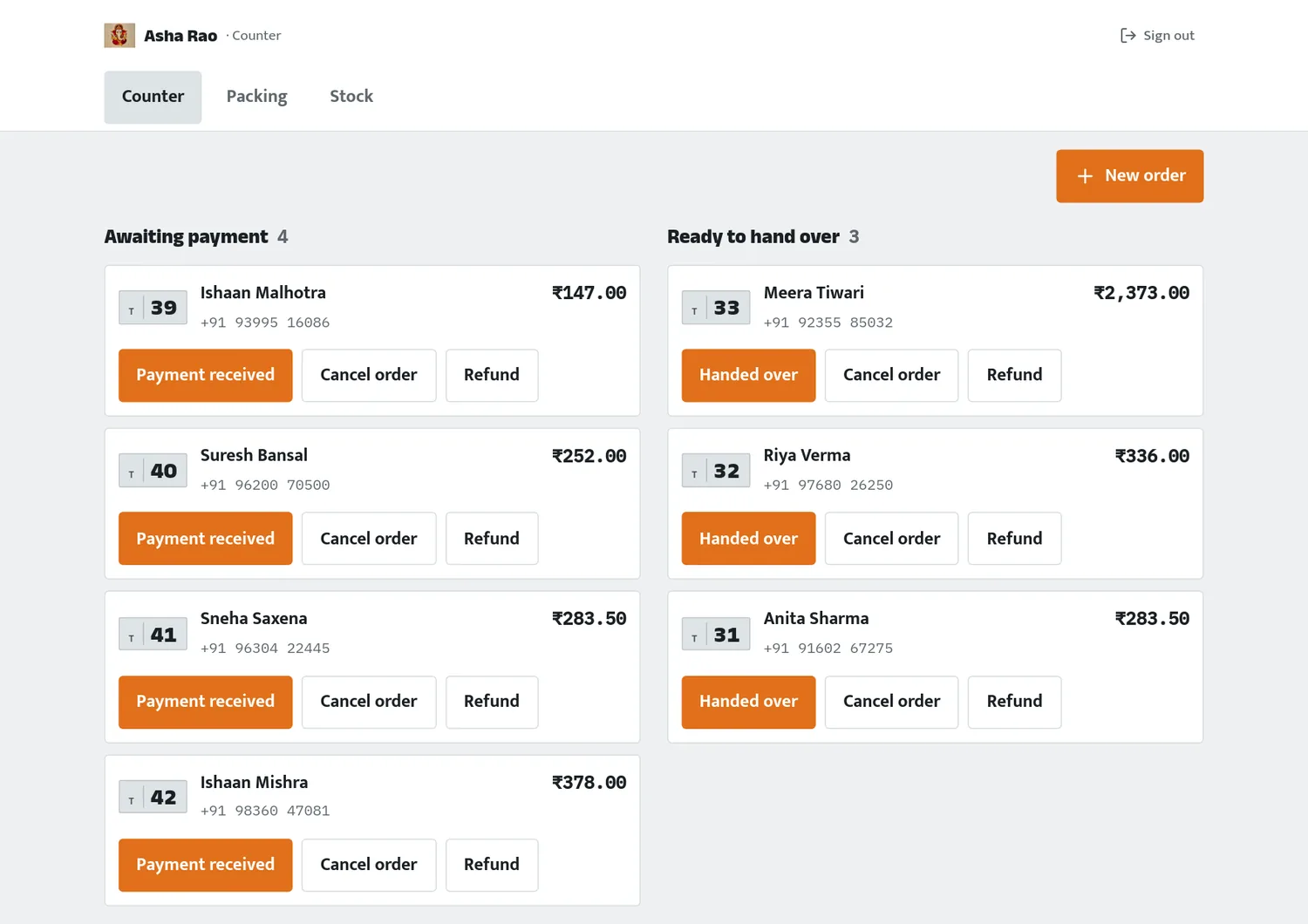
Your counter is left doing the part only a person can do: take the money and hand the order over.
Before
After
Sixty seconds, start to finish
Questions after watching? Talk to a person.
One order, start to finish
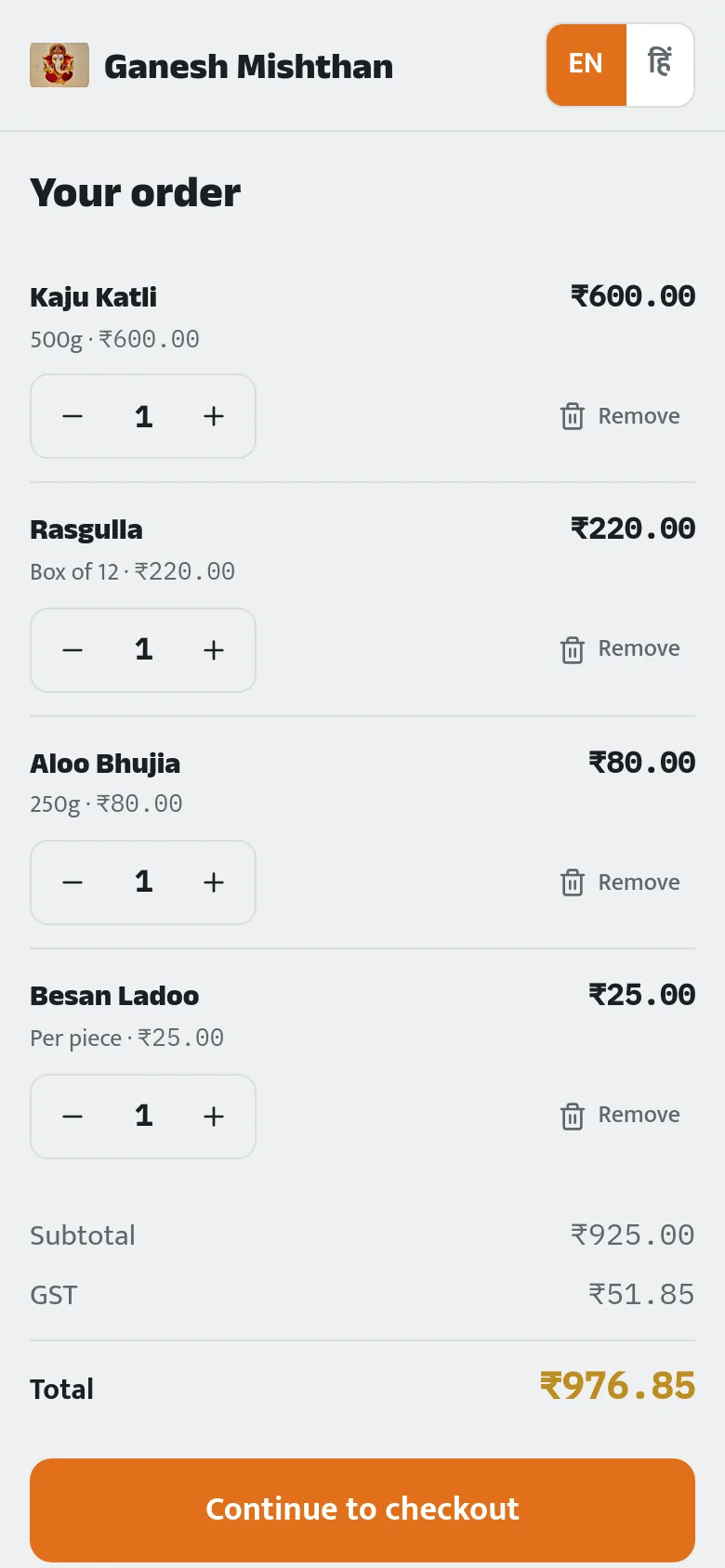
A token is the order’s name. The customer’s screen, the kitchen card, the ready board and the counter all call it the same thing.
They scan, browse, submit. T47 is issued before any money moves — which is exactly what a cash customer needs to show your counter.
Paid by UPI or card? This step doesn’t exist. Paying at the counter? It waits here until someone marks the cash received.
Money is accounted for, whichever way it arrived. Only now does stock come down, and only now does the kitchen see it.
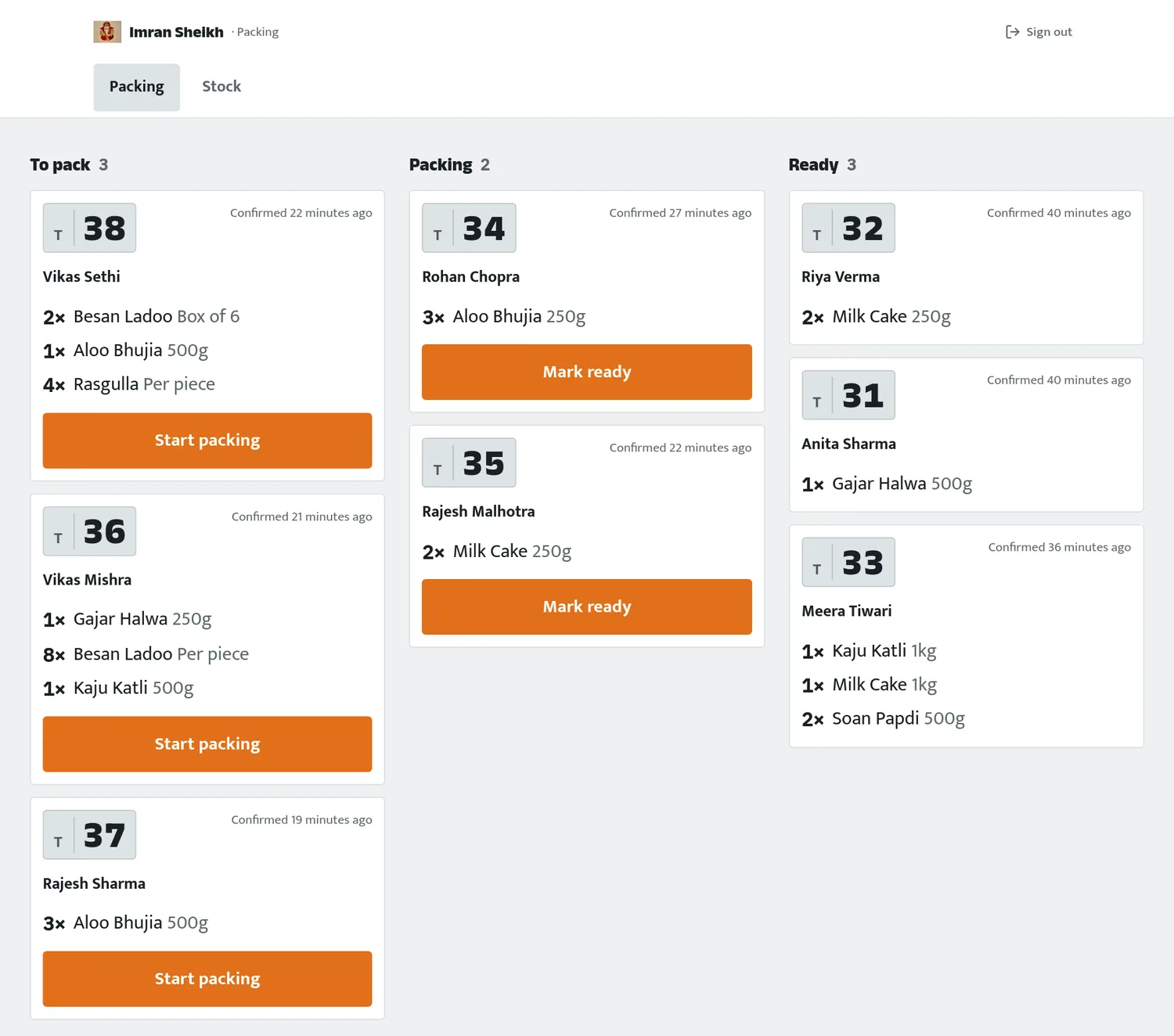
No prices, no phone numbers on that screen. Not hidden behind a setting — never sent there at all.
The token goes up and the customer’s own tab updates by itself. Nobody has to shout a name twice.
Handed over, rating prompt appears. The sale is in today’s figures and the stock count with nobody writing anything down.
Ready for collection तैयार
Live demo · this is a real screen
Two ways to run it
Menu, cart, token, counter, kitchen queue, ready board, every report — identical either way. The only question is whose machine it runs on, and you can change your mind later.
Option one
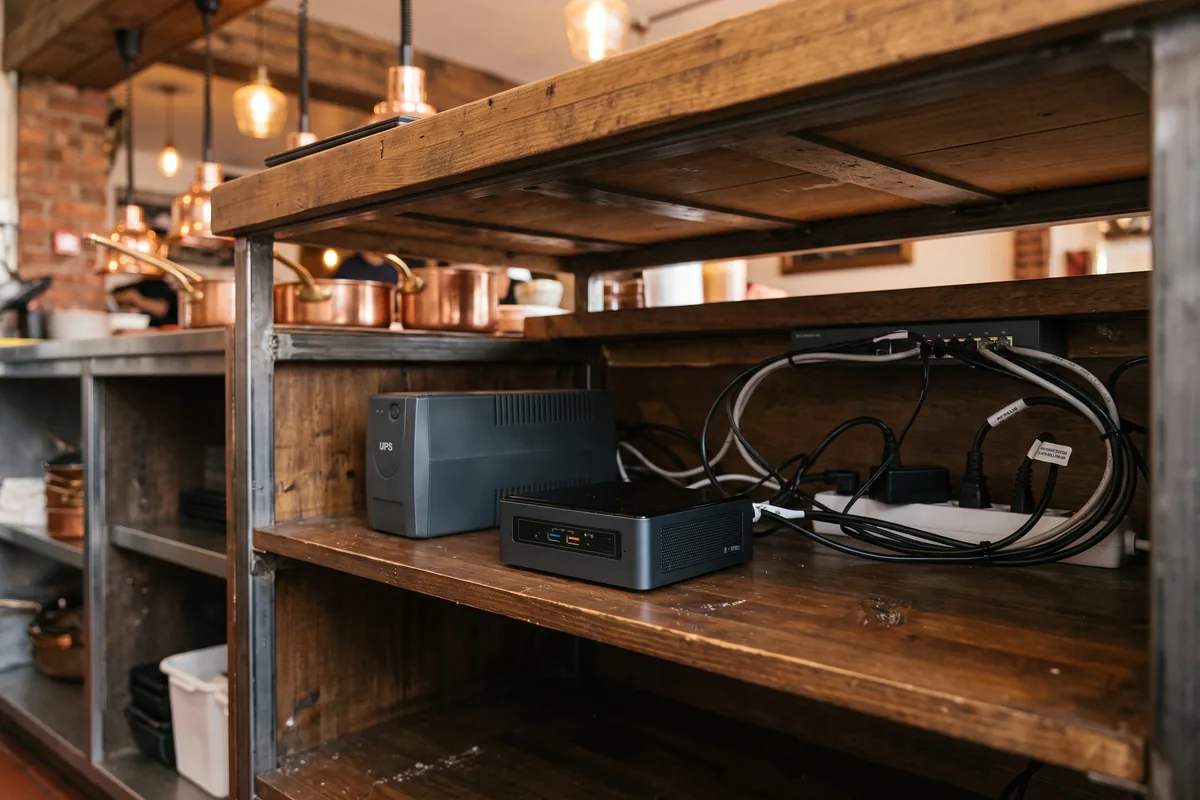
Your machine, your Wi‑Fi, your data. Nothing leaves the building.
One computer · your own network
Right for a single busy outlet where you’d rather the data sat on a machine you can point at.
Option two · most shops start here
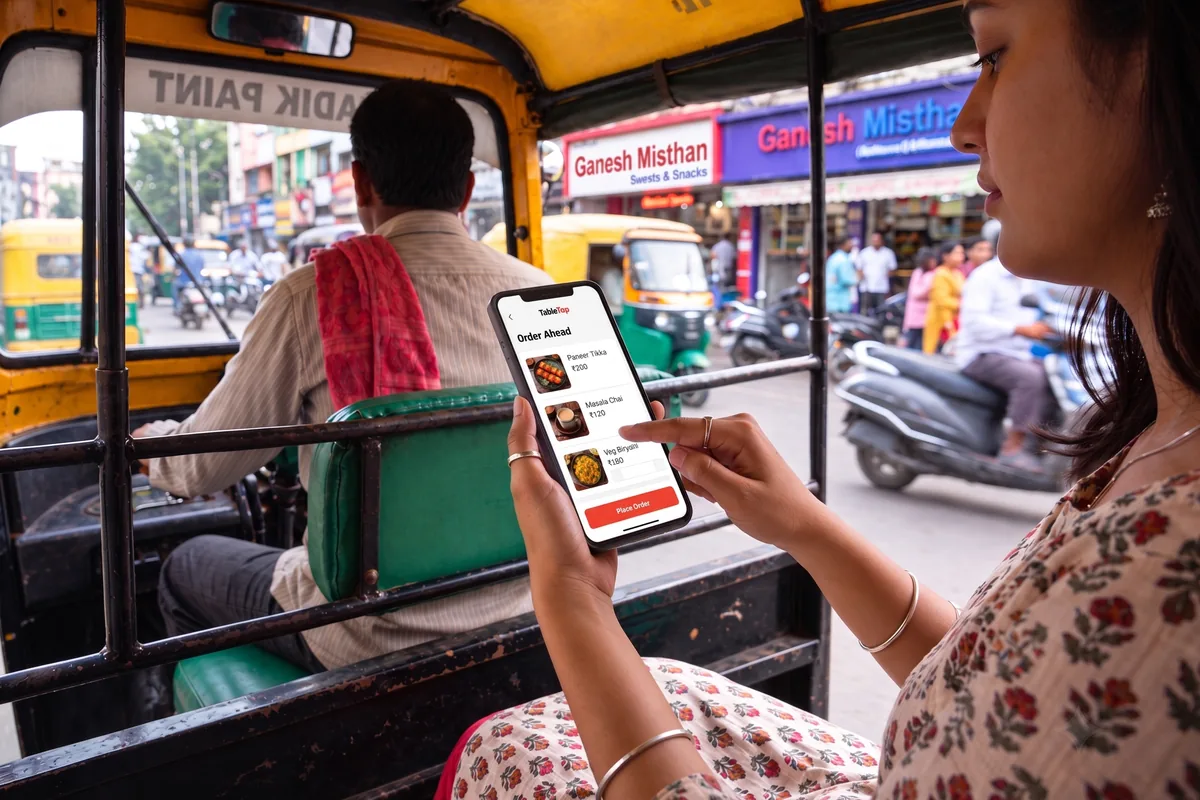
We run everything. You get your own address and a monthly price.
Right for anyone who wants it running tomorrow, or who runs more than one place.
| In‑Shop | Hosted | |
|---|---|---|
| Customer menu, cart, token, live status | Identical | Identical |
| Counter, kitchen queue, ready board | Identical | Identical |
| Menu, stock, staff, reports, day-close | Identical | Identical |
| Where your data lives | Your machine, in your shop | Our servers, backed up nightly |
| Where customers can order from | Inside the shop, on your Wi-Fi | Anywhere |
| Ordering ahead of arrival | Not possible | Yes |
| Hardware you supply | Mini-PC and a UPS | None |
| Getting started | We install it on site | Sign up and pick your address |
| If the internet drops | Ordering carries on; card payments pause | Everything pauses until it’s back |
| What it costs | One-off setup, then support | Per month |
What you actually get
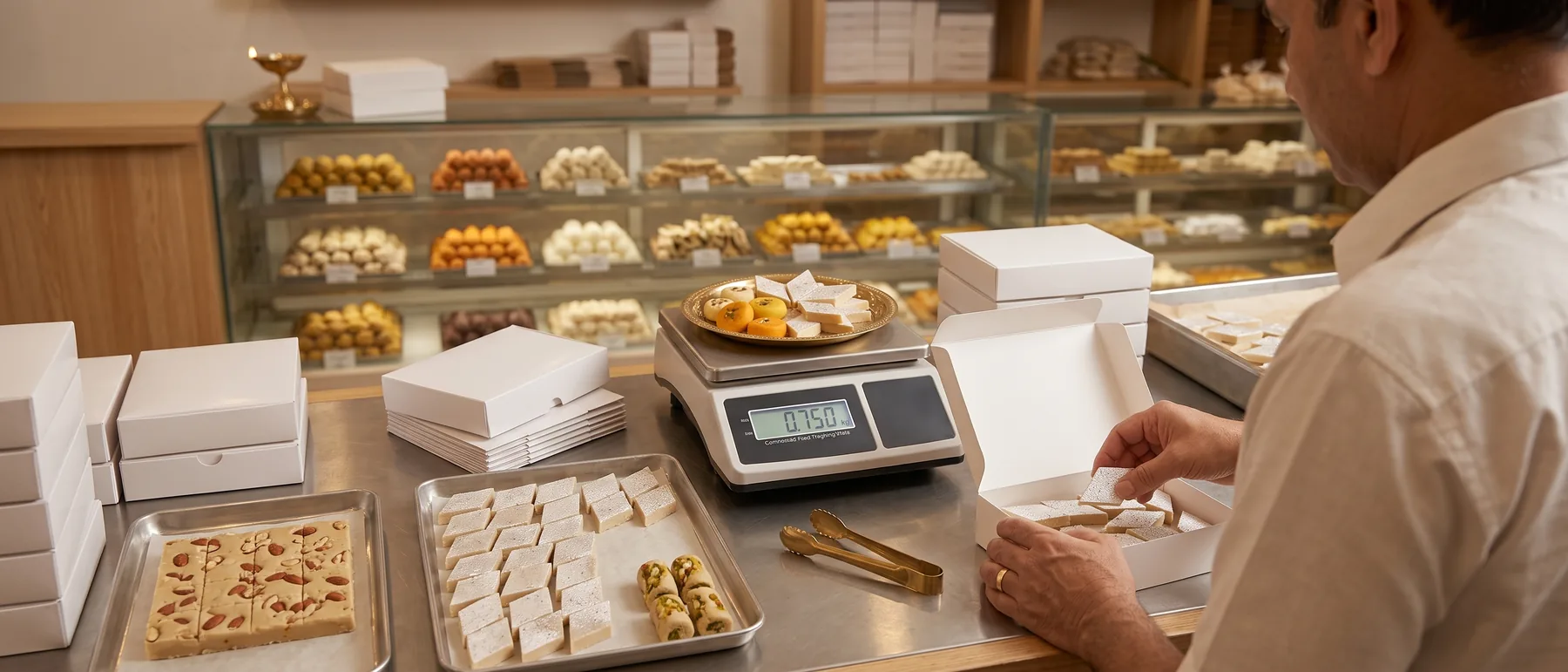
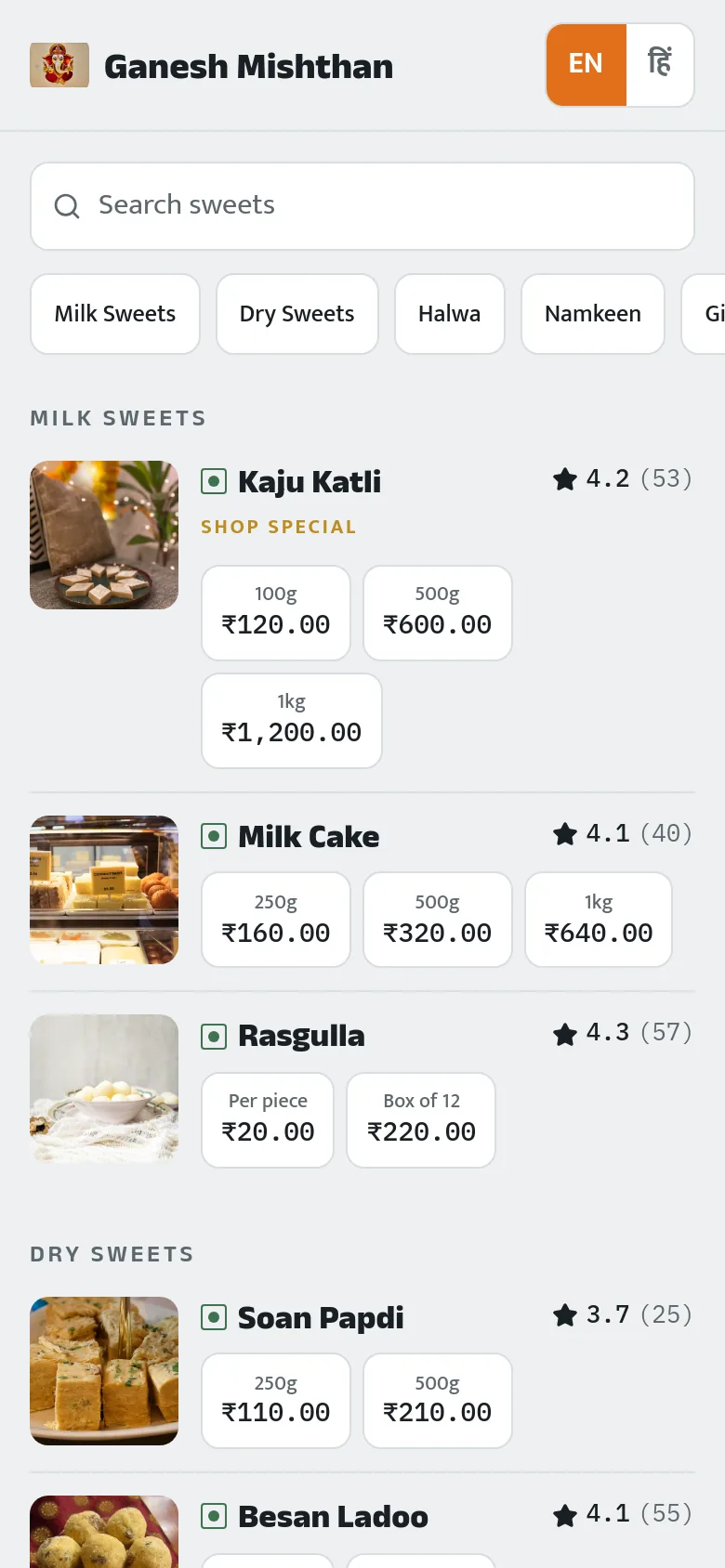
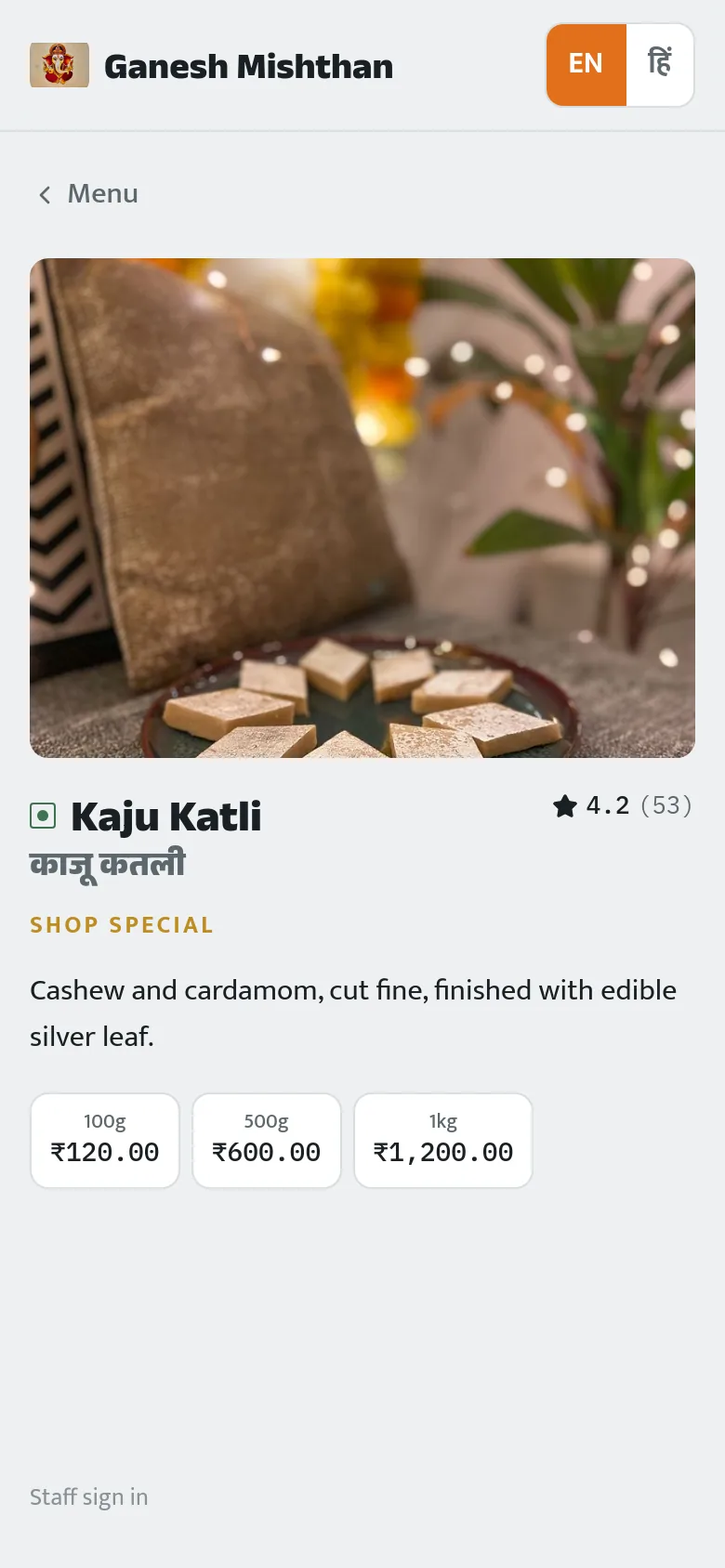
100g, 500g and 1kg of the same barfi are one price ladder on one row — not three products — and they draw down one stock count. Sell half a kilo and the kilo option knows. Most systems quietly assume you sell burgers.
Kaju Katliकाजू कतली
★ 4.6In stock · 4.2 kg left on the tray
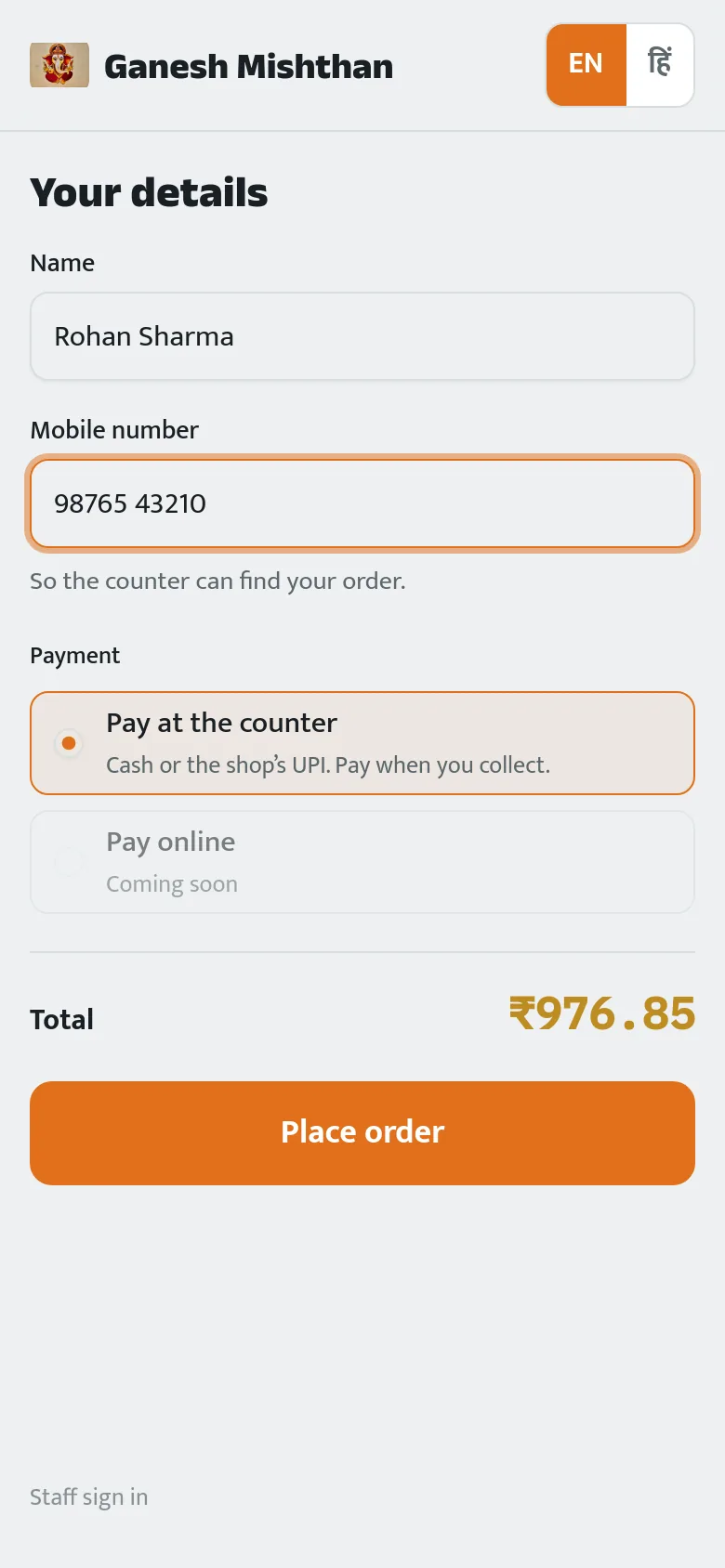
Nothing is packed before payment is confirmed. So someone who orders 2kg and never turns up has cost you exactly nothing. That one rule is what makes pay-at-counter safe to offer instead of something to discourage.
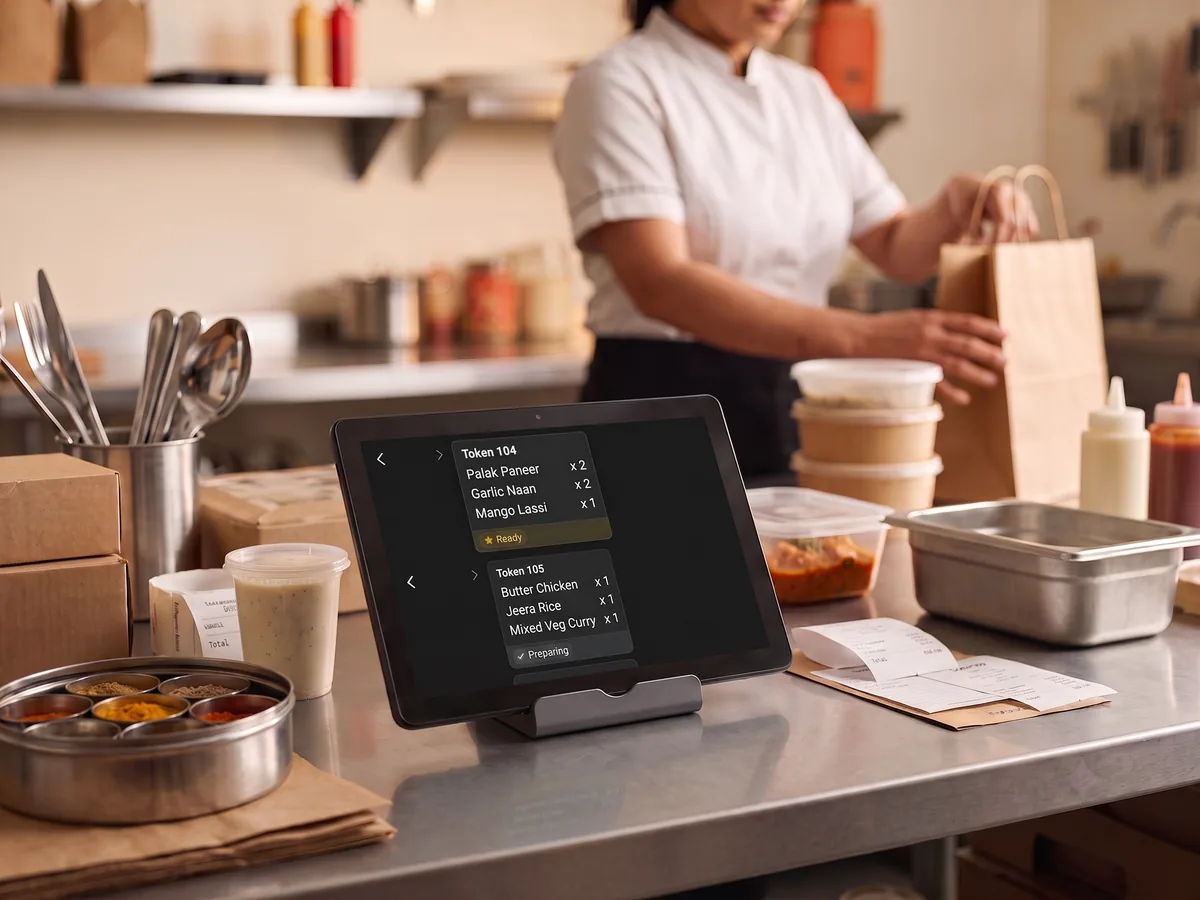
Token, name, items. No prices, no phone numbers. Not hidden behind a setting someone can switch off by accident — that data never reaches those screens at all.
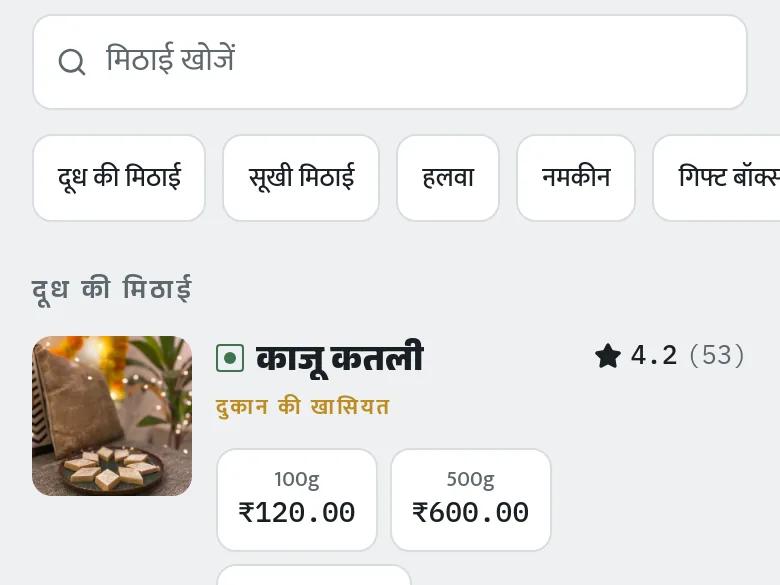
Every screen in both, with your own Hindi names on each item rather than a machine translation. Staff panels included — which is who reads them ten hours a day.
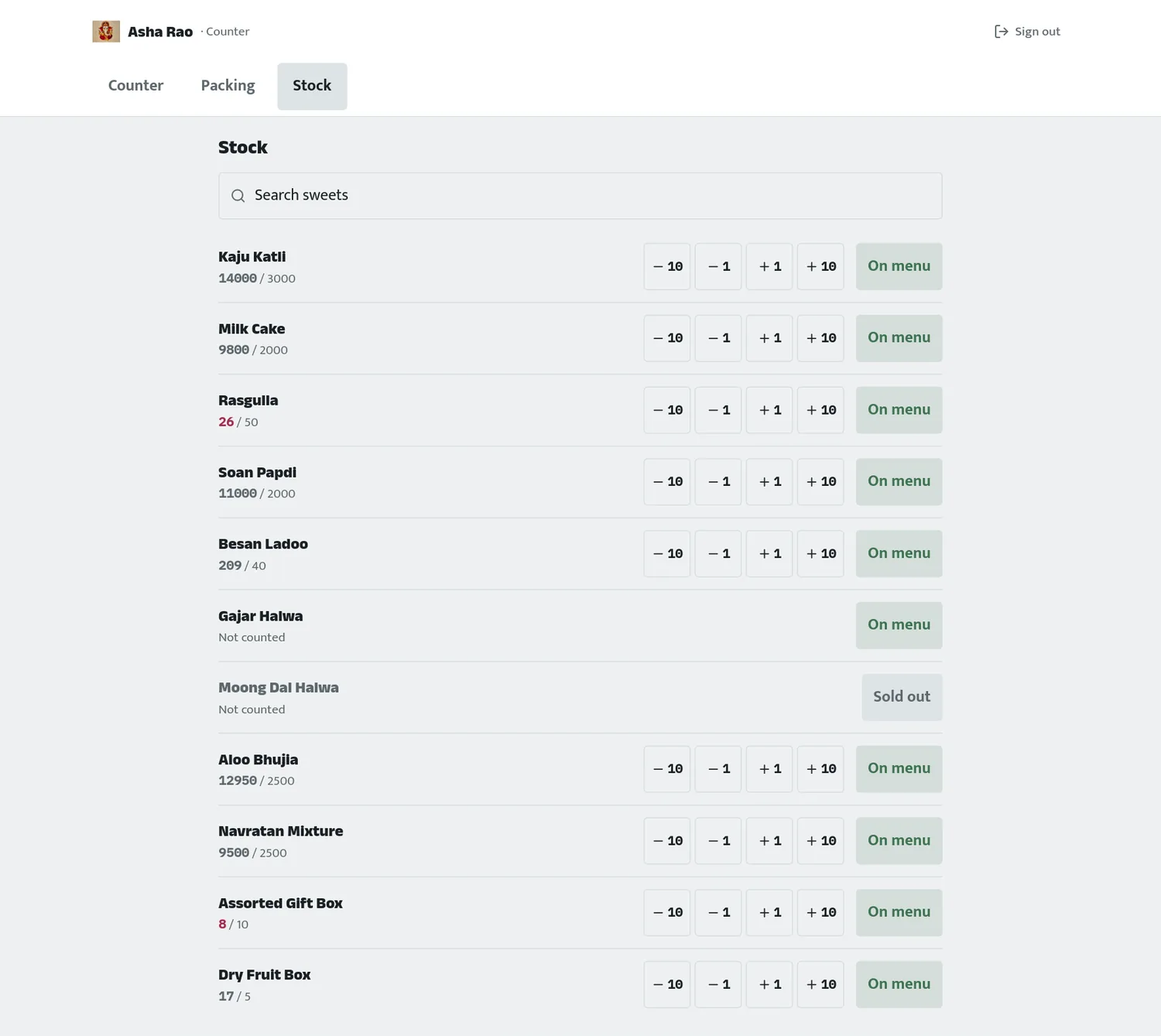
The last box sells and the item goes out of stock on every phone in the shop, that second. Nobody has to remember to take it down, and nobody orders what you can’t hand them.
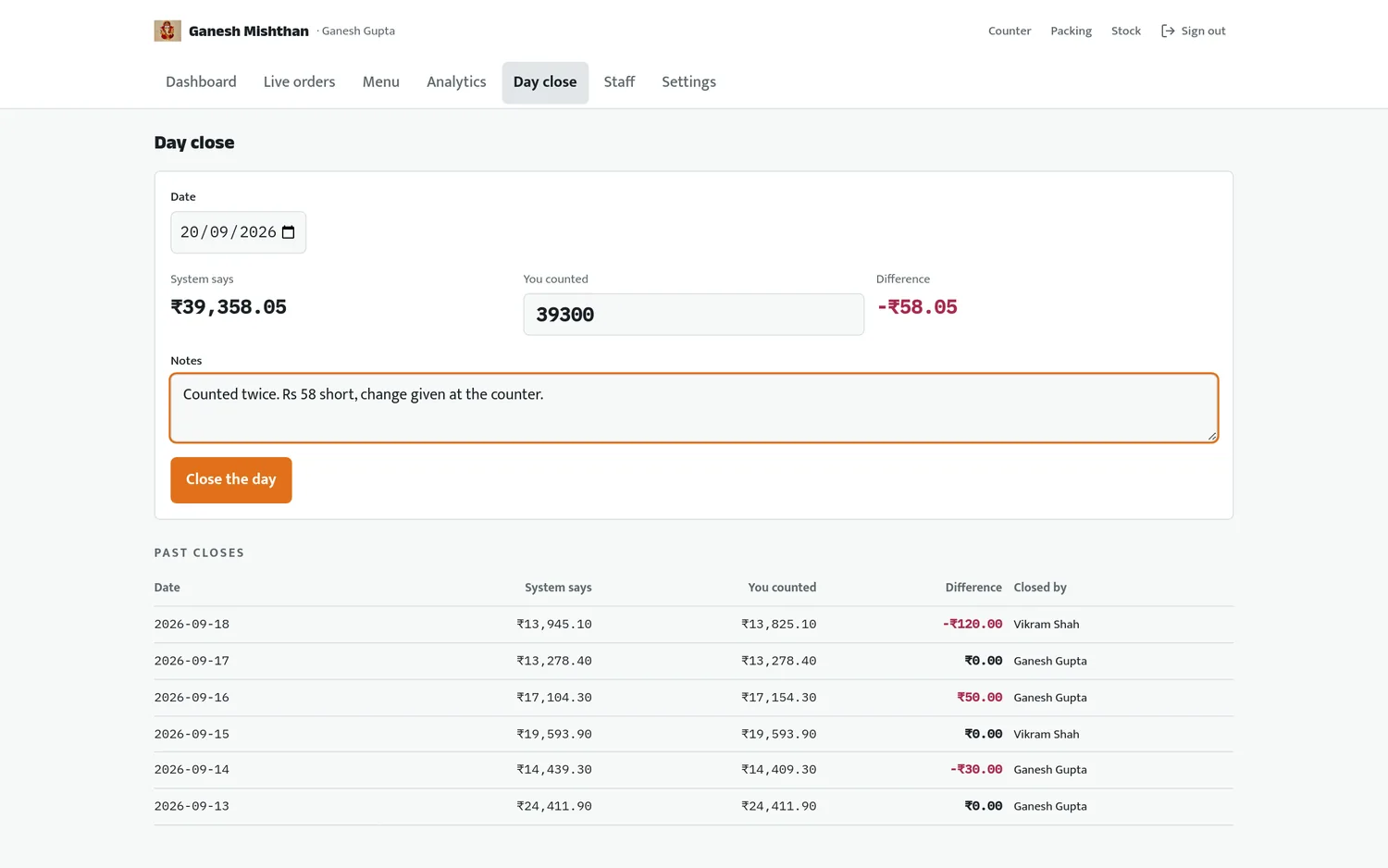
Count the cash at closing. The system shows what it should have been and what the difference is. That number is what tells you the day’s figures are real.
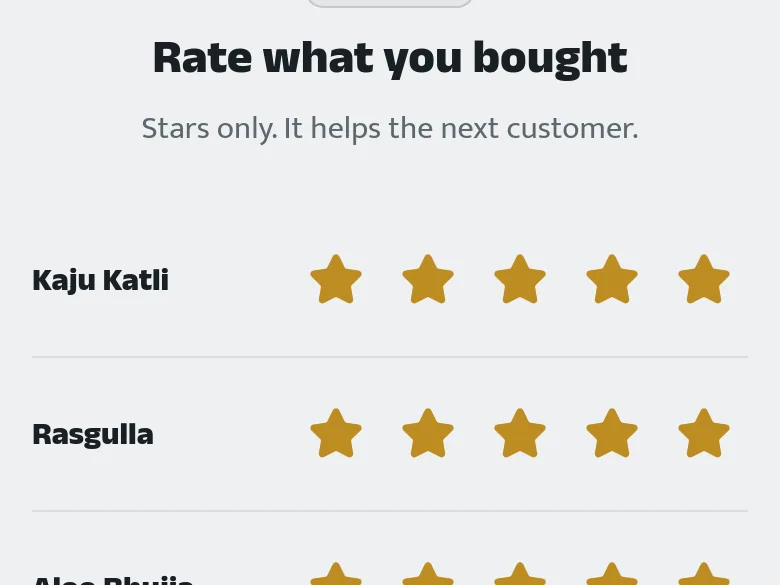
Only customers who collected an order can rate it, and only what they bought. Nothing shows until five people have rated — so a new dish never sits there wearing one bad star.
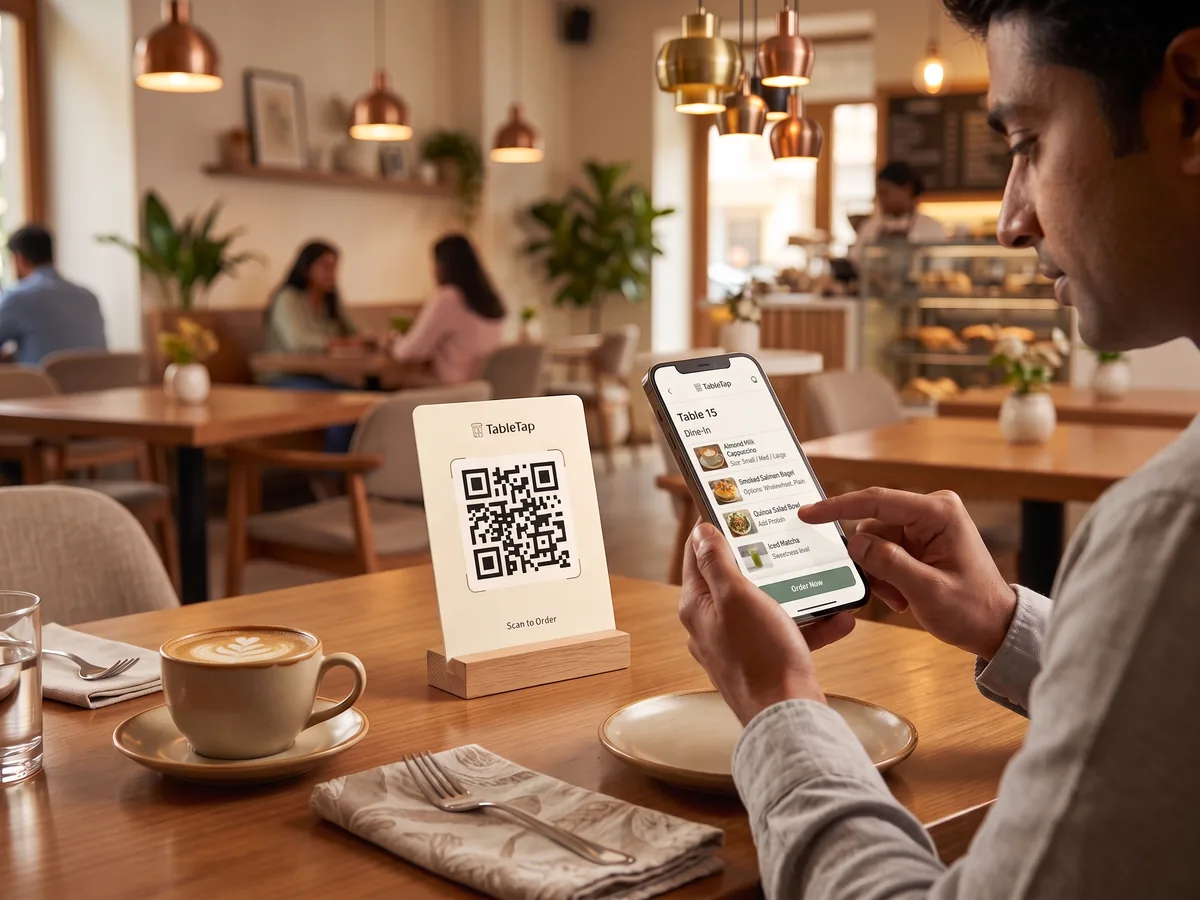
Every table gets its own QR. Scan where you’re sitting, order, keep a running tab, settle at the end — same token, same queue, same reports. On for a café, off for a takeaway counter, same account.
Name, logo, categories, items, prices, pricing units, tax rates, currency, languages, which features are on — all of it yours to change, any time, without calling us. Same on both plans. That’s the difference between buying a product and hiring someone to maintain a website for you.
The real thing, not a mockup
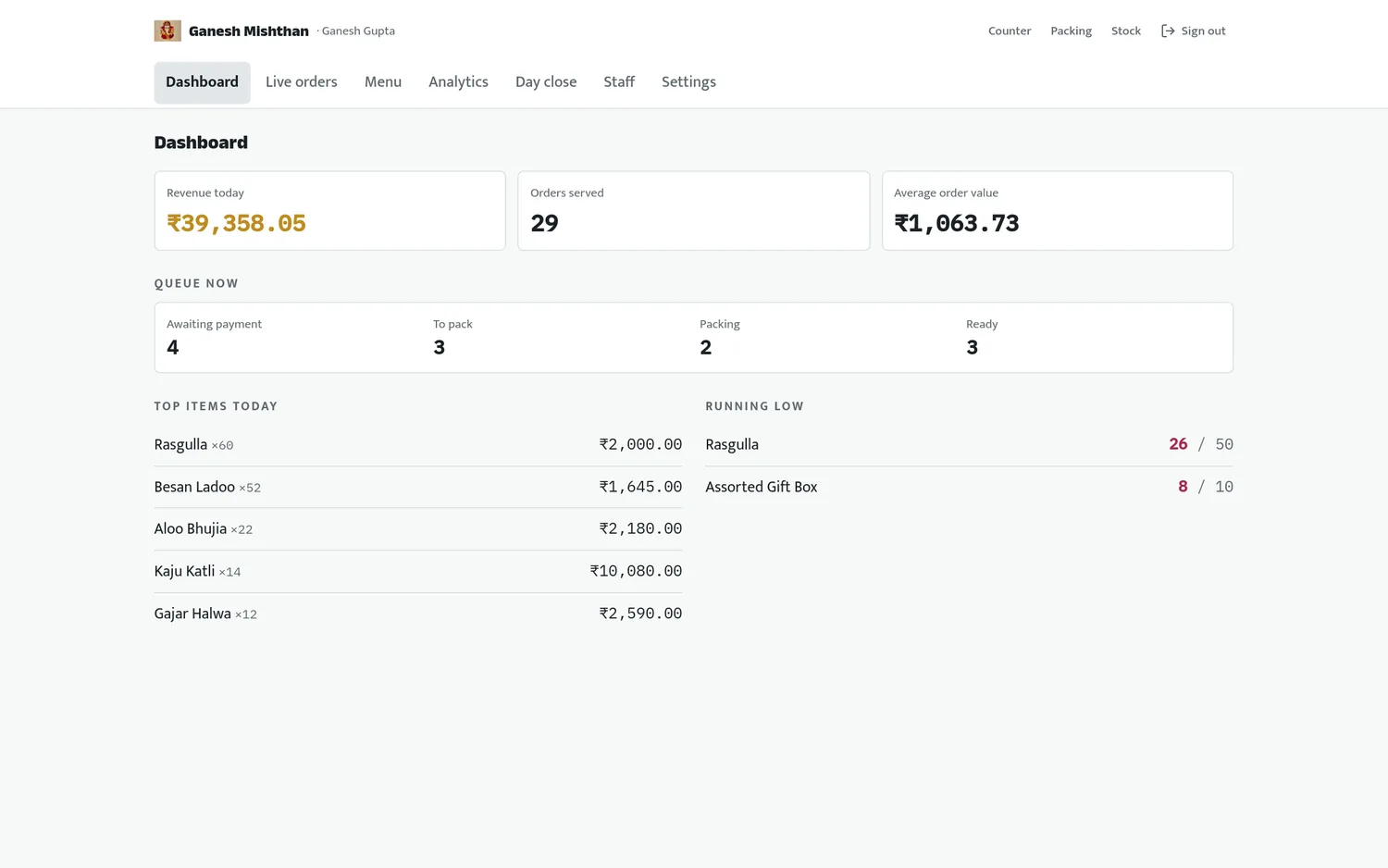
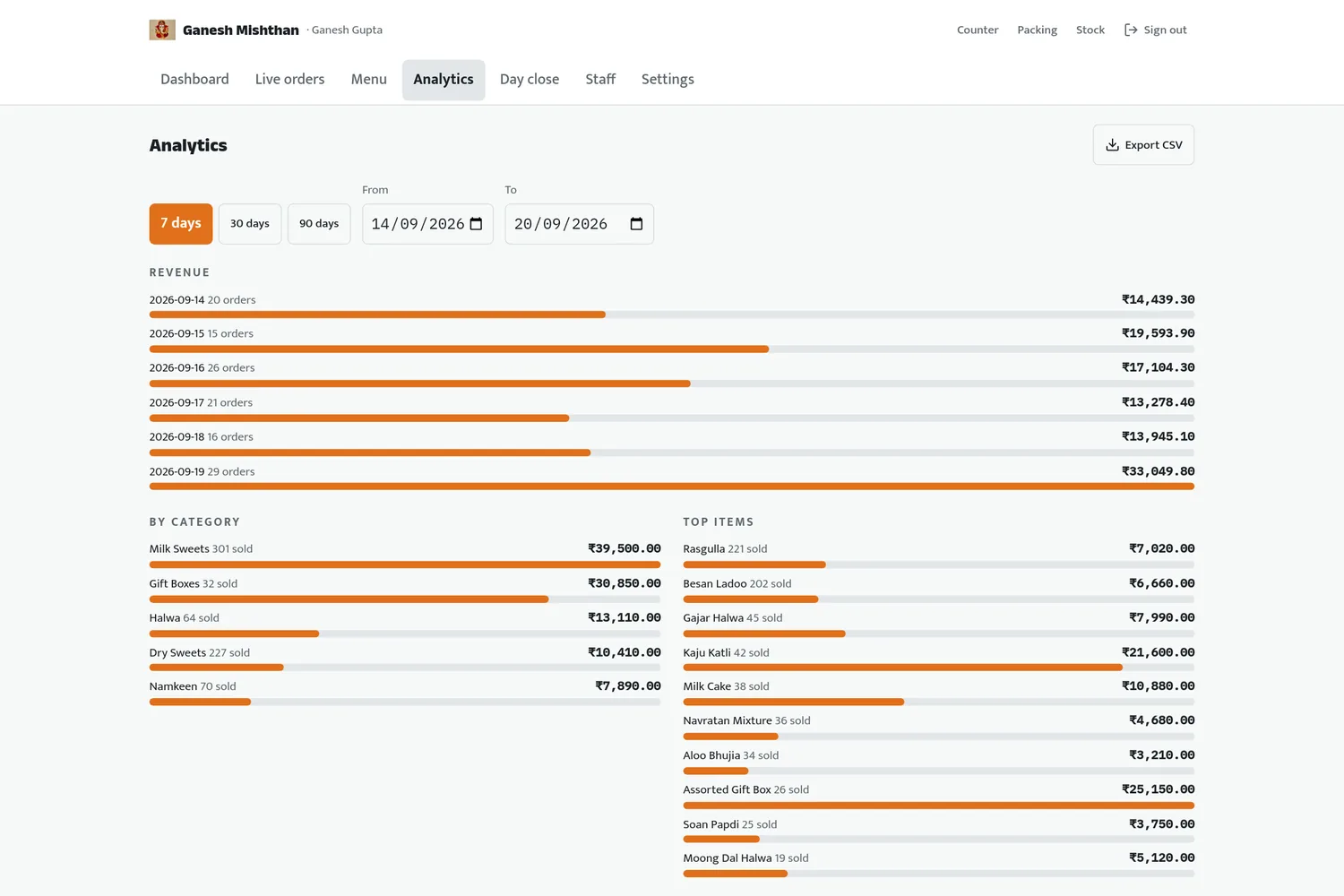
Every screen below is a capture off the running build with a real shop’s menu in it — the same one you can open from the button at the bottom of this page.
What the customer holds
What your shop runs on
Straight answers
Being straight about the edges is what makes the rest of it believable.
Not this
No Swiggy, no Zomato, no riders, no commission. If you already use those, keep them — this doesn’t touch them.
Not this
No accounts, no points, no marketing list. A name and a number exist so your counter can match a person to a token. Nothing is built on top of them.
Not this
It records every sale accurately and exports it all. It does not replace your CA, and it isn’t trying to replace Tally.
Not this
It removes a task, not a person. The counter person you have is the one who now has time to serve whoever is standing in front of them.